Egyptian mythology is the story carved on every temple wall you will stand in front of
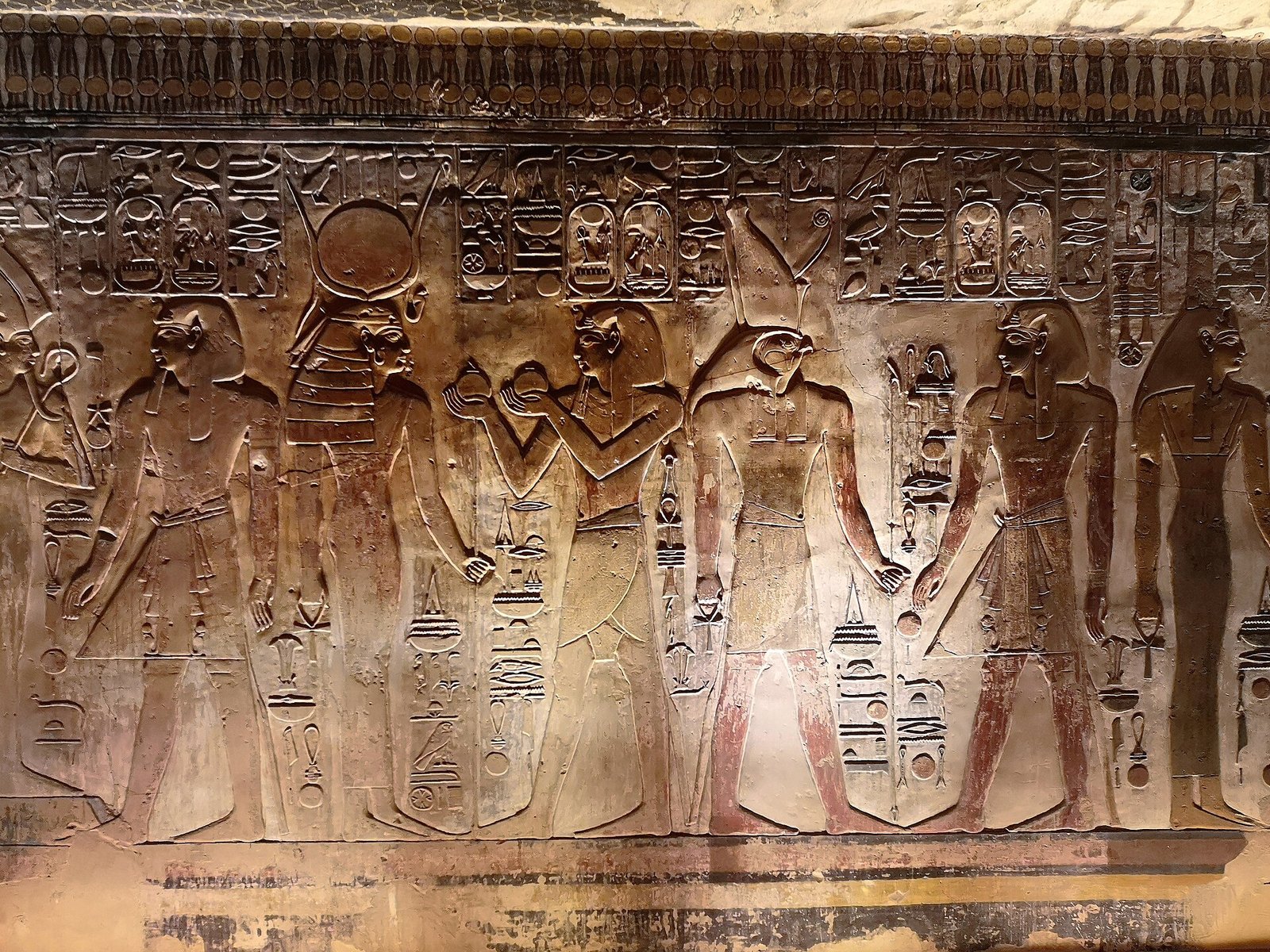
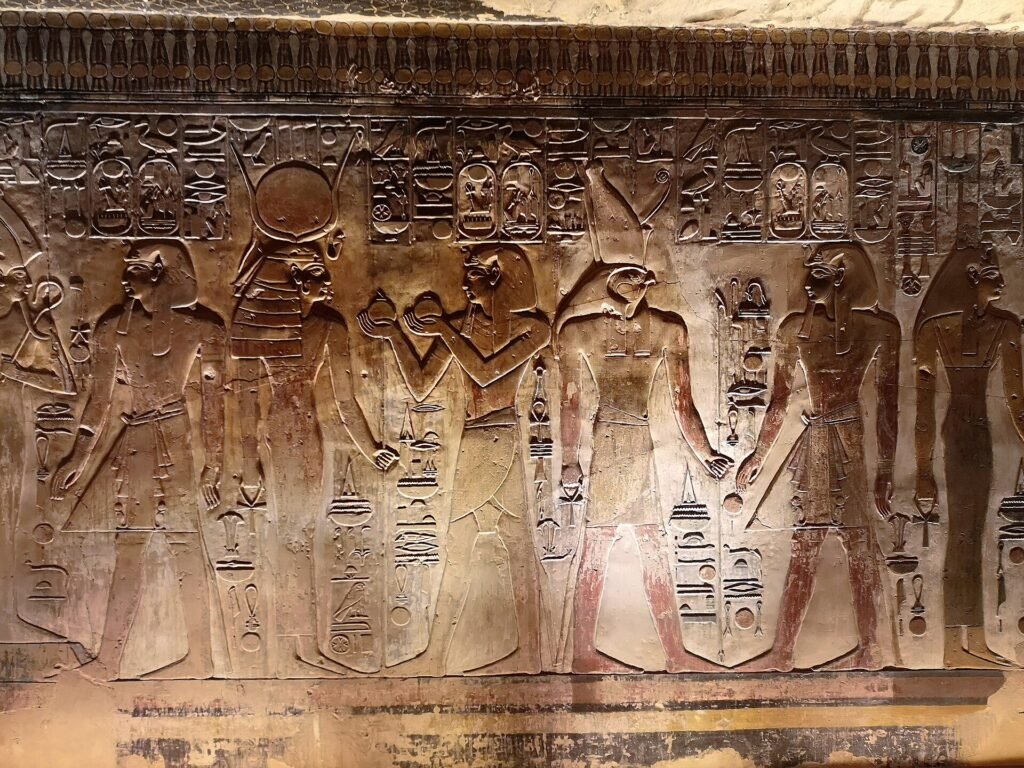
Egyptian mythology is the story carved on every temple wall you will stand in front of
Egyptian mythology is the set of stories the people of the Nile told for more than three thousand years to explain where the world came from, why the sun rises, what happens after death and why a king rules. There was never one official version. Three cities had their own creation story, Osiris was murdered by his brother Seth and avenged by his son Horus, Ra fought the serpent Apophis every night in the underworld, and every dead person faced a scale with a feather on it. Learn them before you travel and a temple stops being decoration and becomes a book.
What Egyptian mythology is, and why there is no single version
The Egyptians never wrote a book of mythology. What survives is scattered across pyramid spells, coffin texts, the illustrated funerary papyri of the New Kingdom and a handful of literary papyri that tell complete episodes with dialogue and jokes. The most orderly retelling of the Osiris story was written in Greek by Plutarch roughly fifteen centuries after the myths took shape.
So when a version you read online contradicts what your guide says at a temple wall, neither is wrong. Local versions coexisted for centuries and nobody reconciled them. If you want the cast list first, our guide to the Egyptian gods and how to recognize them on a wall covers who is who. This page is about what they did.
Three creation myths, one for each great city
Every version starts the same way: before anything existed there was Nun, a dark, formless ocean, and out of it rose a mound of earth. What happened on that mound depended on which city was telling the story.
Heliopolis and the Ennead
At Heliopolis, now under northern Cairo, the creator was Atum, later fused with the sun as Atum-Ra. Alone on the mound, he produced Shu, the air, and Tefnut, moisture. They gave birth to Geb, the earth, and Nut, the sky, whose children were Osiris, Isis, Seth and Nephthys. Those nine gods are the Ennead, and the family tree explains the whole Osiris story.
Hermopolis and the Ogdoad
At Hermopolis in Middle Egypt the story began with eight gods in four pairs who together raised the mound. From it a lotus opened and the young sun emerged. Thoth, the city's god, presided over this version.
Memphis and Ptah
At Memphis the creator was Ptah, the craftsman god. He conceived the world in his heart, the seat of thought for the Egyptians, and brought it into being by speaking its name. The text survives on the Shabaka Stone in London.
Osiris, Isis, Seth and Horus: the story that explains half of what you will see
If you learn one myth before you land, learn this one. Osiris ruled Egypt as a good king. His brother Seth, jealous of the throne, murdered him, sealed him in a chest and threw it in the Nile, then cut the body into pieces and scattered them across the country.
Isis, sister and wife, searched Egypt for the pieces, reassembled them, wrapped them in linen and revived Osiris long enough to conceive a son. That wrapping is the mythic origin of mummification. The son was Horus, and when he grew up he claimed his father's throne.
What followed was not a war but a lawsuit. The papyrus known as the Contendings of Horus and Seth describes eighty years of litigation before a court of gods, with bribery, shape shifting and a race in stone boats. Horus won the land of the living, and Osiris took the throne of the dead.
The living pharaoh is Horus and the dead pharaoh becomes Osiris. And resurrection is a procedure, not a miracle: do the ritual correctly and it repeats. Every tomb and coffin in Egypt is built on that promise.
Ra's night journey and the serpent Apophis
For the Egyptians, sunrise was a victory that had to be won every night. Ra crossed the sky in a boat by day and at dusk entered the Duat, the underworld, for a twelve hour voyage through the dark. The Amduat and the Book of Gates map this trip hour by hour on the walls of the Valley of the Kings.
The enemy was Apophis, a serpent of pure chaos, who tried each night to swallow the sun. The crew fought him off with spells and spears, and in some scenes Seth, of all gods, stands in the prow and harpoons the snake. In the sixth hour Ra merged with the body of Osiris, and by dawn he was reborn as a scarab pushing the sun.
You will see this story in three forms: Apophis stabbed with knives along the tomb corridors of Luxor, a tomcat cutting the snake's head off at Deir el Medina, which is Ra in feline form, and the sky goddess Nut arched across the ceilings of Dendera, swallowing the sun in the west and giving birth to it in the east.
Maat and the judgment of the dead
One word ties the whole system together: maat. It means truth, justice, order and cosmic balance all at once, pictured as a seated goddess with an ostrich feather on her head. Its opposite was isfet, chaos and falsehood, and the pharaoh's job was to hold maat in place, so the offering scene in every temple shows the king handing a tiny figure of Maat to the god.
After death you entered the Hall of Two Truths, declared before forty two divine assessors the things you had not done, and watched as Anubis placed your heart on one pan of a scale and the feather of Maat on the other. Beside the scale crouched Ammit, part crocodile, part lion, part hippopotamus, ready to eat any heart that weighed heavy.
Pass, and Horus led you to Osiris on his throne. This is the scene in spell 125 of the Book of the Dead, the single most reproduced image of Egyptian mythology.
Hathor, Sekhmet and the destruction of mankind
This myth is about a goddess who nearly ended the human race. Ra had grown old and people began plotting against him, so he sent out his Eye in the form of Hathor, who turned into the lioness Sekhmet and started slaughtering humanity across the desert.
Ra regretted the order but could not call her back, so he had thousands of jars of beer brewed, dyed red with ochre and poured over the fields overnight. Sekhmet, mistaking it for blood, drank until she fell asleep and woke up as the gentle Hathor again.
The text is carved in the tomb of Seti I and on one of Tutankhamun's gilded shrines. It explains why Hathor has columns carrying her cow-eared face at Dendera, and why hundreds of black granite Sekhmet statues stand in Karnak: they were placed to keep the lioness calm.
Thoth, Seshat and the gods who kept the records
Thoth, with an ibis head or as a baboon, is the divine scribe, the inventor of writing, the moon and the keeper of the calendar. Nut was forbidden to give birth on any day of the year, so Thoth won a fraction of the moon's light in a board game and used it to create five extra days on which the children of Geb and Nut were born.
His counterpart is Seshat, goddess of writing and measurement, with a leopard skin and a seven pointed star on her head. She appears in a scene called stretching the cord, where she and the king drive stakes into the ground to lay out a temple's foundation. Look for it at Edfu, Dendera and Karnak.
Why the gods have animal heads
This is the question everyone asks in front of a wall, and the common answer, that the Egyptians worshipped animals, is wrong. The animal head is a statement about the god's nature, not a portrait. A falcon head says height, sight and command of the sky, so it goes on Horus and Ra. A jackal head says the creature that prowls the desert cemeteries, turned from threat into guardian, so it goes on Anubis.
The same god can appear with a different head depending on which aspect is being stressed, or fully human, or as an object. Hathor is a woman, a cow, a woman with cow ears, or a sistrum rattle, depending on the scene. Once you understand that the image is a sentence rather than a likeness, the walls get much easier to read.
The local triads: Thebes, Memphis and Elephantine
Beyond the national myths, each major city organized its gods into a family of three: father, mother and child. Know the triad of the place you are visiting and you know whose house you are in.
| City | Father | Mother | Child | Where you meet them |
|---|---|---|---|---|
| Thebes (Luxor) | Amun | Mut | Khonsu | Karnak, Luxor Temple, the Opet procession reliefs |
| Memphis | Ptah | Sekhmet | Nefertum | Memphis open air museum, Sekhmet statues at Karnak |
| Elephantine (Aswan) | Khnum | Satet | Anuket | Elephantine island, Esna temple, Sehel island |
| Abydos | Osiris | Isis | Horus | Temple of Seti I, the Osireion |
| Edfu and Dendera | Horus | Hathor | Ihy or Harsomtus | Edfu, Dendera and the birth houses of both |
Thebes matters most because Amun became the state god of the New Kingdom, and the annual Opet festival, when his statue sailed from Karnak to Luxor Temple to renew the king's power, is carved along the colonnade of Luxor Temple.
The Aten interlude, when one pharaoh tried to switch the myths off
For about seventeen years in the fourteenth century BC the whole system was suspended. Akhenaten closed the temples of Amun, moved the capital to Amarna and declared that the only god was the Aten, the visible disk of the sun.
The Aten had no myths: no birth, no family, no night battle, no judgment scene. The Great Hymn to the Aten praises the sun for making chicks hatch and fish leap, but never tells a tale, and that absence is probably one reason the experiment died with its author. Within a few years Tutankhamun restored the old gods. You will see the scars at Karnak and in many Theban tombs, where the name of Amun was hacked out under Akhenaten and recut afterward.
Where the myths are carved: Edfu, Dendera, Abydos and Philae
Four temples between Luxor and Aswan tell these stories more completely than anywhere else, and all four fit into a Nile cruise or a land route.
- Edfu. The temple of Horus at Edfu is the best preserved in Egypt, and its western inner wall carries the full drama of Horus defeating Seth, who appears as a small hippopotamus harpooned from a boat.
- Dendera. Hathor's temple has the finest ceilings in the country: Nut arched over the sky, the hours of the night, and a circular zodiac whose original was cut out and shipped to Paris. The rooftop chapels show the resurrection of Osiris step by step.
- Abydos. Seti I's temple is where Osiris's head was said to be buried. Seven chapels still carry their painted color, and the Osireion behind is a half sunken hall built to look like the primeval mound rising from Nun.
- Philae. The temple of Isis at Philae was the last place in Egypt where the old religion was practiced, and its birth house shows Isis nursing the infant Horus in the marshes.
Two more are close by. Kom Ombo is a double temple for the crocodile Sobek and the falcon Horus the Elder, and Esna is dedicated to Khnum, with a ceiling of constellations in original color.
Where to see the gods in museums
Temples show the myths in stone. Museums show the objects that carried them into daily life and death. In Egypt the four that matter are these.
- The Grand Egyptian Museum at Giza holds the complete Tutankhamun collection, including the gilded shrines carved with the Hathor story above, and a grand staircase lined with statues of kings as Osiris. Our Grand Egyptian Museum guide explains how to plan the visit.
- The Egyptian Museum in Tahrir Square keeps the Narmer Palette, where Horus already stands over the king's enemies five thousand years ago, and hall after hall of painted coffins with the weighing of the heart on their sides.
- The National Museum of Egyptian Civilization in Fustat has the royal mummies, which turns the Osiris promise into something you can stand beside.
- The Luxor Museum is small and perfectly lit, with the finest statues from the Karnak cache.
How a guide brings the gods alive, and how we build a mythology route
The difference between a good and a bad temple visit is whether anyone tells you the story while you are looking at it. Standing at Edfu while an Egyptologist walks you along the wall, pointing at the harpoon, the hippopotamus and the cake shaped like Seth being cut up at the end, is another. Our guides are Egyptian Egyptologists, trained in the reliefs, and they know which five scenes to find in each building. A mythology themed route with Explora Egipto usually runs like this:
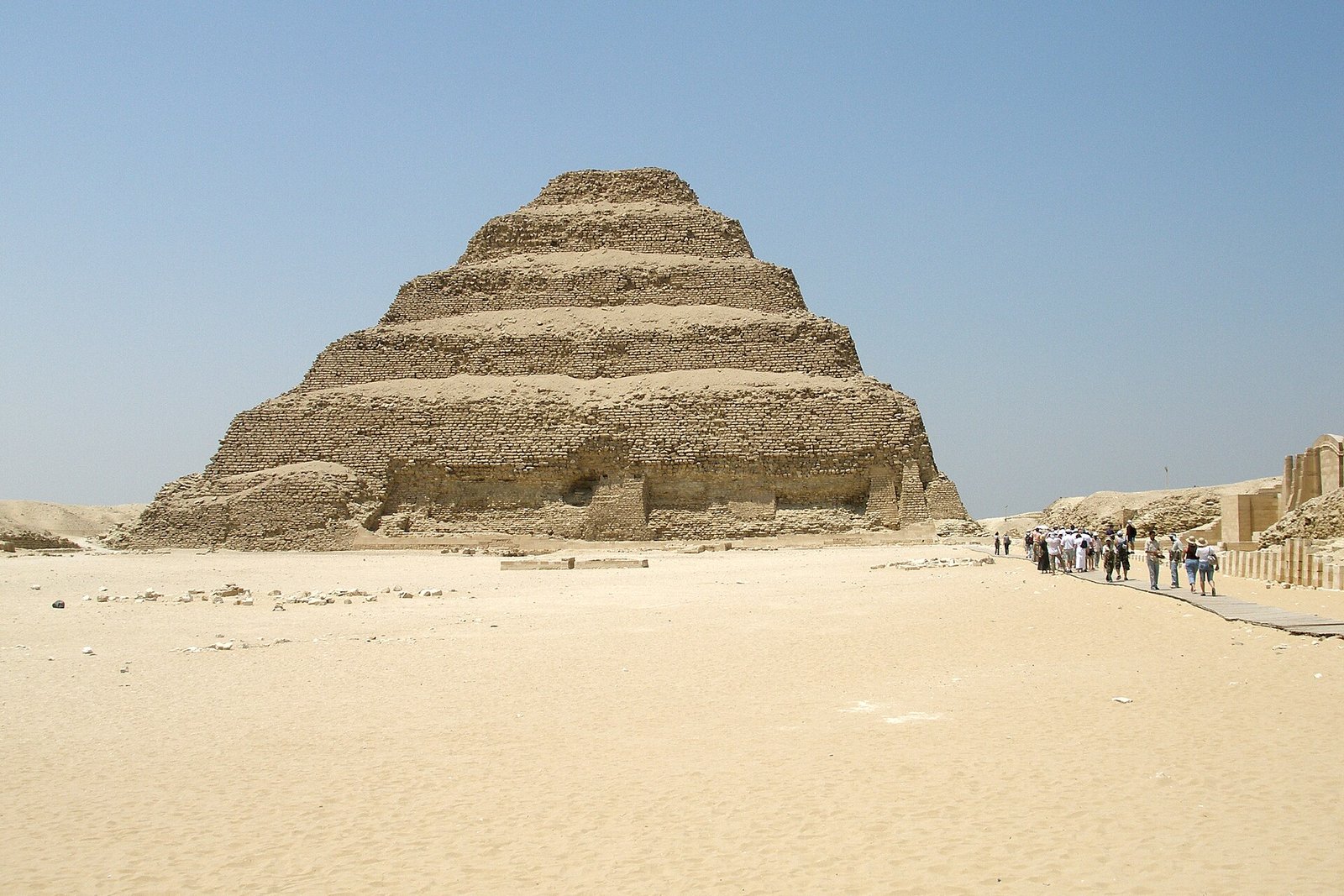
- Cairo, two days. The Egyptian Museum for the Narmer Palette and the coffins, the Grand Egyptian Museum for Tutankhamun's shrines, Saqqara for the Pyramid Texts inside the pyramid of Unas and the Serapeum of the Apis bulls.
- Domestic flight to Luxor, three days. Karnak and Luxor Temple for the Theban triad, the Valley of the Kings for Ra's night journey, Deir el Medina for the cat killing Apophis, and a day trip north to Dendera and Abydos.
- Nile cruise to Aswan, three or four nights. Esna, Edfu and Kom Ombo from the boat, then Philae and Elephantine island at Aswan.
Every element can move. This is a custom Egypt tour with no fixed program; tell us what you want to see with your own eyes, ask us for the quote and we send it with the route drawn out day by day.
Frequently asked questions
What is the most important myth in Egyptian mythology?
The Osiris cycle. Osiris is murdered by Seth, reassembled by Isis, and avenged by their son Horus, who wins the throne. It explains why the living king is Horus and the dead king is Osiris, why bodies were mummified, and what the judgment of the dead promises.
Did the ancient Egyptians have one creation story?
No. Heliopolis said Atum rose from the waters of Nun and produced the nine gods of the Ennead. Hermopolis said eight primeval gods raised the mound and a lotus opened to release the sun. Memphis said Ptah thought the world and spoke it into being.
Who was Apophis and why does he matter?
Apophis was a giant serpent embodying chaos who attacked Ra's boat every night in the underworld, trying to swallow the sun. The gods fought him off and Ra was reborn at dawn. The myth captures the core Egyptian belief that order must be won again every day.
What does Maat mean?
Maat is truth, justice, order and cosmic balance in a single word, shown as a goddess with an ostrich feather on her head. The pharaoh's job was to uphold it, and after death every person's heart was weighed against her feather.
Why do Egyptian gods have animal heads?
The animal head expresses a quality, not an identity. A falcon means sky and command, a jackal means guardian of the cemetery, an ibis means precision and writing, a lioness means fury and healing. The Egyptians did not worship animals as such, though a few chosen living animals, like the Apis bull, were believed to host a god.
Where is the best place in Egypt to see the myths carved on walls?
Edfu for the fight between Horus and Seth, Dendera for the sky goddess Nut and the Osiris chapels on the roof, Abydos for the seven painted chapels and the Osireion, and Philae for Isis nursing the infant Horus. All of them fit into one Nile cruise with a good guide.
Read the walls with someone who knows the stories
Tell us your dates, how many days you have and which myths you most want to see in stone, and we come back with a route through the museums of Cairo, the tombs of Luxor and the temples of Edfu, Dendera, Abydos and Philae, with an Egyptologist guide. Ask us for the quote and we send it with the days laid out.